University Day
Friday, October 12, 2012
11:00 a.m.
Memorial Hall
History
University Day is an occasion to remember the University’s past and celebrate its future. The date, October 12, marks the laying of the cornerstone of Old East, the institution’s first building and the oldest state university building in the nation. The Carolina community first celebrated University Day in 1877, after Governor Zebulon B. Vance, as chair of the Board of Trustees, ordered that the day “be observed with appropriate ceremonies under the direction of the faculty.”
Subsequent celebrations have featured speeches from distinguished members of the faculty and honored visitors. President John F. Kennedy spoke in 1961, as did Bill Clinton in 1993. North Carolina governors have made University Day a traditional stop during their first term of office – including Luther Hodges, Jim Hunt, Terry Sanford, Jim Martin, Mike Easley, and Bev Perdue.
Since 1971, the faculty has presented the Distinguished Alumna and Alumnus Awards on University Day to recognize those Tar Heels who have made outstanding contributions to humanity.
Beginning in 1957 with William B. Aycock, University Day became the traditional inauguration day for new chancellors: Paul F. Sharp in 1964, J. Carlyle Sitterson in 1965, N. Ferebee Taylor in 1972, Christopher C. Fordham III in 1980, Paul Hardin in 1988, Michael Hooker in 1995, James Moeser in 2000, and Holden Thorp in 2008.
Public higher education began in Chapel Hill in 1793, and for more than two hundred years Carolina has symbolized the importance of education in a democratic nation. It remains a place defined by those values, as noted by Governor Terry Sanford in 1987, of “freedom and liberty and tolerance, the search for truth, the defense of dignity, courage to arrive freely at convictions, and the personal courage to stand for those hopes and truths.”
Keynote Address by Jamie Bartram
Processional Information
Classes will be cancelled from 10:00 a.m. to 1:00 p.m. to allow faculty, staff and students to participate in University Day.
Faculty who are participating are encouraged to wear their academic regalia and line up at the Old Well at 10:30 a.m. for the processional. The staff processional, coordinated by the Employee Forum, will also form at the Old Well at 10:30 a.m. In case of rain, faculty and staff should gather in Phillips Hall.
Faculty who would like to rent regalia for the University Day processional should contact esbradshaw@store.unc.edu (962-2427) at Student Stores by October 1.
Guest Speaker
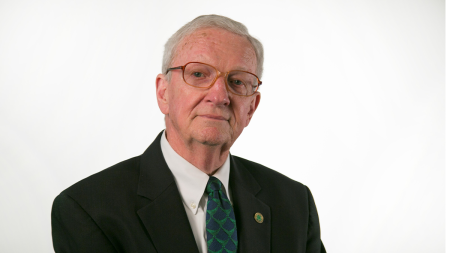
Jamie Bartram, Ph.D., Director of the Water Institute
Jamie Bartram, Ph.D., is director of the Water Institute at the University of North Carolina at Chapel Hill and Don and Jennifer Holzworth Distinguished Professor of Environmental Sciences and Engineering at the Gillings School of Global Public Health.
The Water Institute is a founding member of the new U.S. Water Partnership, a public-private group formed to share U.S. knowledge, leverage and mobilize resources and facilitate cross-sector partnerships to find solutions to global water accessibility challenges, especially in the developing world.
Bartram has more than 20 years of experience in international policy, research and advisory work in public health and disease prevention, especially in relation to environment and health and water supply and sanitation. His research interests focus on the connections between water (including sanitation and hygiene) and health – especially the links between science, policy and practice. They include technologies for urban sanitation renewal; management systems for drinking-water safety and rural drinking-water supply; emerging issues (including water scarcity and climate change) and their impacts on system sustainability; and sector capacity issues such as monitoring, the costs and impacts of interventions and effective regulation and financing. A specific current focus concerns the establishment of new post-2015 international development targets.
From 1998 to 2009 he was the Coordinator, Water, Sanitation and Health Programme, World Health Organization, where he led reform of its international monitoring and standard-setting activities and the development of a series of influential communities of practice. He was awarded the International Water Association Grand Award in 2004 and holds an honorary professorship at Aberystwyth University and visiting professorships at the universities of Bristol and Surrey, all in the United Kingdom.
Distinguished Alumna/Alumnus Award Biographical Sketches
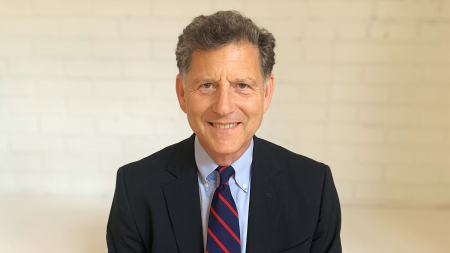
Gregory Stanley Allgood
Gregory Allgood, who holds two degrees from Carolina (B.S. [1981], M.S.P.H. [1983]), as well as a Ph.D. in 1986 from North Carolina State University, is a senior fellow in sustainability organization at Cincinnati-based Procter & Gamble. He led a team that developed an inexpensive powder that, with a little stirring and time, causes impurities in water to coagulate, allowing them to be filtered out through a cloth. It precipitates not just impurities like particles of dirt or bacteria, but parasites like cryptosporidium and giardia, which can cause severe intestinal illnesses. The product’s brand name is PUR Water Purifier. It was named by Popular Mechanics magazine as one of the top 10 world-changing innovations of 2008.
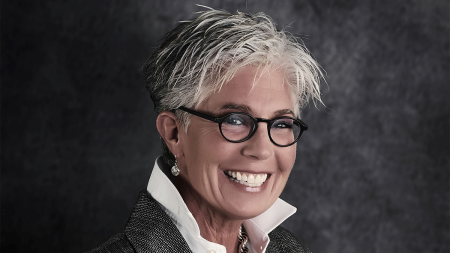
Mary Marshall Clark
Mary Marshall Clark is director of the Columbia Center for Oral History, previously known as the Oral History Research Office at Columbia University. She graduated from Carolina in 1975 with a B.A. in religious studies and psychology and went on to earn two master’s degrees from Union Theological Seminary.
Clark was instrumental in the founding of the International Oral History Association. She was the co-principal investigator, with Peter Bearman, of the September 11, 2001 Oral History Narrative and Memory Project, and directed related projects on the aftermath of September 11th in New York City.
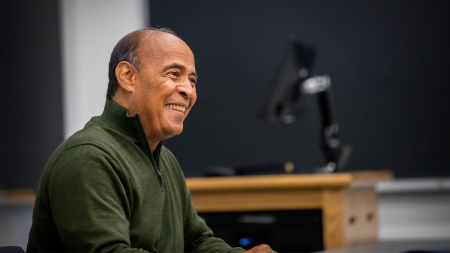
Deborah Parham Hopson
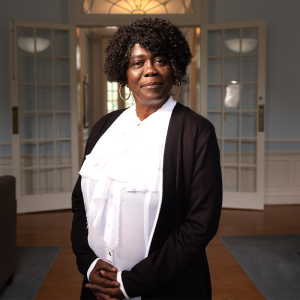
Deborah Parham Hopson is associate administrator for the U.S. Department of Health and Human Services’ Health Resources and Services Administration’s (HRSA) HIV/AIDS Bureau (HAB), where she is responsible for managing the Ryan White HIV/AIDS Treatment Extension Act of 2009 (Ryan White HIV/AIDS Program). The $2 billion program funds medical care, treatment, referrals and support services for uninsured and underserved people living with HIV disease as well as training for health care professionals.
Parham Hopson received her undergraduate degree in nursing and health from the University of Cincinnati and her master of science in public health (1979) and doctor of philosophy (1990) degrees in health policy and administration from Carolina’s Gillings School of Global Public Health.
Jonathan T. M. Reckford
Jonathan Reckford is chief executive officer of Habitat for Humanity International. After graduating from Carolina (B.A., 1984) and the Stanford University Graduate School of Business, he spent a number of years in the for-profit sector, holding executive and managerial positions at Goldman Sachs, Marriott, the Walt Disney Co. and Best Buy.
While he was acquiring the skills needed to succeed in the business world, a professor’s words struck home with him: “The same skills that will make you a success in the for-profit world also are desperately needed in the not-for-profit world.” A longtime admirer of Habitat’s work, Reckford believed the organization was a good fit with his personal faith and values, and he felt that his business career had honed the skills needed to lead a nonprofit with excellence.
Edward Kidder Graham Faculty Service Award
Ferrel Guillory, professor of the practice of journalism at the UNC School of Journalism and Mass Communication and adjunct faculty member in the Department of Public Policy, will receive the Edward Kidder Graham Faculty Service Award today. The award was established by the Faculty Council to recognize distinguished service to the state, the nation and the University by a faculty member.
Among his many accomplishments, Guillory founded the Program on Public Life (formerly the Program on Southern Politics, Media and Public Life) in 1997 to build bridges between the academic resources at Carolina and the governmental, journalism and civic leaders of North Carolina and the South. In addition, he co-authored The State of the South, a series of biennial reports to the region and its leadership (1996, 1998, 2000, 2002, 2004, 2007, 2010–2011), and the book, The Carolinas: Yesterday, Today, Tomorrow: An Exploration of Social and Economic Trends, 1924–1999 (Duke Press, 1999).
He received his undergraduate degree from Loyola University New Orleans and his master of science degree from Columbia University’s Graduate School of Journalism.